
Currently Empty: ₹0.00
Introduction: The Building Blocks of Good Health
In a world of complex diet trends and conflicting nutritional advice, it’s easy to overlook the simple, foundational foods that have sustained healthy populations for millennia. At the heart of a balanced diet are two humble, yet incredibly potent, food groups: grains and pulses.
These staples—think of essentials like rice, wheat, lentils (dals), and beans (chana, rajma)—are the primary source of energy and protein for a vast majority of the global population. However, not all grains and pulses are created equal. The methods used to grow them can significantly impact their nutritional quality, their safety, and their effect on the environment.
This article will explore the extensive nutritional benefits of incorporating whole grains and pulses into your daily meals, with a specific focus on why choosing certified organic grains and pulses is a critical decision for your health and the health of the planet.
The Nutritional Case for Whole Grains and Pulses
Before discussing the “organic” distinction, it’s important to understand why these foods are considered essential. Whole grains (like brown rice or whole wheat) and pulses (like lentils, chickpeas, and kidney beans) offer a comprehensive nutritional profile.
1. Excellent Sources of Plant-Based Protein
Pulses are a cornerstone for vegetarian and vegan diets, and for good reason. A single cup of cooked lentils provides approximately 18 grams of protein, crucial for muscle repair, immune function, and overall growth. When organic grains like rice are combined with organic pulses like dal, they form a “complete protein,” providing all nine essential amino acids that the human body cannot produce on its own.
2. Rich in Complex Carbohydrates for Sustained Energy
Unlike refined carbohydrates (like white bread or sugary snacks) which cause a rapid spike and crash in blood sugar, whole grains provide complex carbohydrates. The body breaks these down slowly, releasing a steady, reliable stream of energy. This is why a meal of dal and rice or a bowl of whole oats can keep you feeling full and energized for hours.
3. High in Dietary Fiber for Digestive and Heart Health
Modern diets are notoriously low in fiber. Whole grains and pulses are exceptionally rich in both soluble and insoluble fiber.
- Insoluble fiber adds bulk to stool, promoting regular digestion and preventing constipation.
- Soluble fiber dissolves in water to form a gel-like substance. This gel can help lower “bad” LDL cholesterol levels and, crucially, slows down the absorption of sugar into the bloodstream, which is vital for managing blood sugar levels.
4. Packed with Essential Vitamins and Minerals
These staples are far from being “empty calories.” They are dense with micronutrients that are vital for bodily functions:
- B-Vitamins: (Thiamin, Niacin, B6) essential for converting food into energy.
- Iron: Critical for transporting oxygen in the blood.
- Magnesium: Involved in over 300 biochemical reactions, including muscle and nerve function.
- Zinc: Supports a healthy immune system and wound healing.
- Folate: Especially important for cell division and in prenatal health.
Why Choose Organic? The Clear Advantages
Given that grains and pulses form the base of our daily meals, the quality of these staples matters immensely. Choosing certified organic grains and organic pulses is one of the most impactful choices you can make for your well-being.
1. Minimized Exposure to Synthetic Pesticides and Herbicides
Conventional, non-organic farming relies heavily on synthetic chemicals. Herbicides are used to kill weeds, and pesticides are used to kill insects. Traces of these chemicals can remain on and in the food you eat. Furthermore, some crops, like non-organic grains and legumes, are sometimes sprayed with chemical herbicides like glyphosate right before harvest to dry them out (desiccation). Certified organic farming prohibits the use of these synthetic chemicals, ensuring the food is as pure as possible.
2. Guaranteed Non-GMO (Genetically Modified Organism)
The “Certified Organic” seal is your iron-clad guarantee that the product is non-GMO. In organic agriculture, the use of genetically modified seeds is strictly forbidden. For consumers who are concerned about the long-term health and environmental effects of GMOs, choosing organic is the most reliable way to avoid them.
3. Supporting Healthier, More Resilient Soil
Organic farming is not just about what it doesn’t do (i.e., use synthetic chemicals); it’s about what it does do. Organic practices are designed to build healthy, living soil. Techniques like crop rotation (planting different crops in sequence), cover cropping (planting crops to cover the soil rather than for harvesting), and composting naturally replenish the soil’s nutrients. Healthier soil not only fights erosion but also grows stronger, more resilient plants that may have a higher nutritional content.
4. Better for the Environment and Biodiversity
The chemical-intensive model of conventional farming can have devastating effects. Pesticide and fertilizer runoff can pollute nearby rivers and groundwater, harming aquatic life. Synthetic pesticides often kill beneficial insects, like bees and butterflies, that are essential for pollination. Organic farming, by contrast, works in harmony with the ecosystem, promoting biodiversity and protecting our water sources.
Building Your Informative Pantry: Key Organic Staples
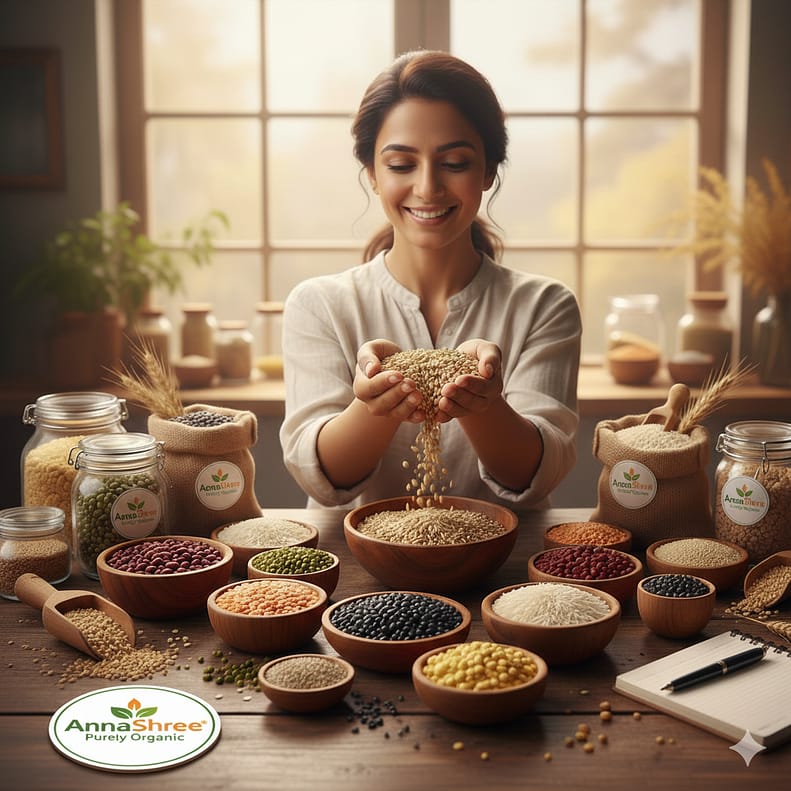
Stocking your kitchen with high-quality organic staples makes healthy eating the default, not the exception. Here are some of the most versatile organic grains and pulses to begin with:
- Organic Toor Dal (Arhar Dal): A staple in most Indian households, this is a versatile, protein-rich lentil perfect for everyday dal tadka.
- Organic Moong Dal (Split Green Gram): Available as whole or split, this dal is light, easy to digest, and cooks quickly. It’s ideal for a nourishing kitchari or light soups.
- Organic Chana Dal (Split Chickpea): With a nutty, sweet flavor, this dal holds its shape well and is excellent for thicker dals, stews, and even homemade besan (gram flour).
- Organic Chickpeas (Kabuli Chana): Incredibly versatile, organic chickpeas are the star of chana masala, hummus, salads, and crispy oven-roasted snacks.
- Organic Kidney Beans (Rajma): A dense, hearty bean with a high fiber and protein content. A staple for the classic rajma masala.
- Organic Brown Rice: By keeping the outer bran and germ, organic brown rice retains all its fiber, vitamins, and minerals. It has a nuttier flavor and chewier texture than white rice.
- Organic Basmati Rice: For those who prefer white rice, choosing organic ensures a pure, aromatic product free from contaminants, perfect for pulao, biryani, or as a simple side.
- Organic Millets (e.g., Ragi, Bajra, Jowar): These ancient, drought-resistant grains are naturally gluten-free and packed with nutrients. They are an excellent, sustainable alternative to rice and wheat.
Conclusion: A Simple Choice for Profound Impact
Grains and pulses are the unsung heroes of a nutritious diet. They provide the essential protein, fiber, and energy our bodies need to thrive.
By making the conscious choice to stock your pantry with certified organic grains and organic pulses from a trusted source like AnnaShree, you are taking a definitive step toward better health. You are not only nourishing your body with pure, nutrient-dense food, but you are also supporting a more sustainable and environmentally-friendly food system for generations to come.
Ready to build a healthier foundation for your meals? Browse the AnnaShree collection of certified organic grains, pulses, and rice.

